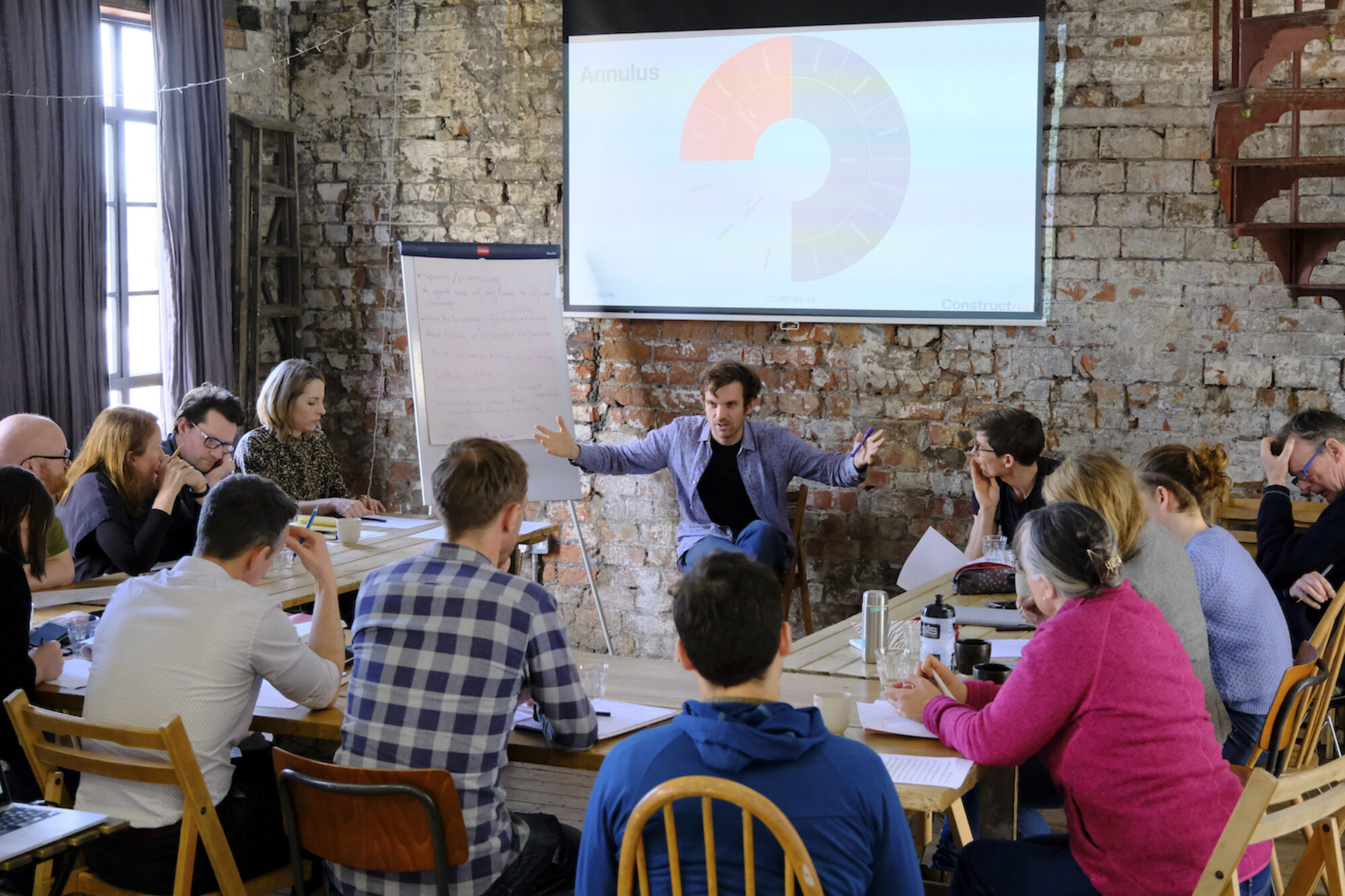

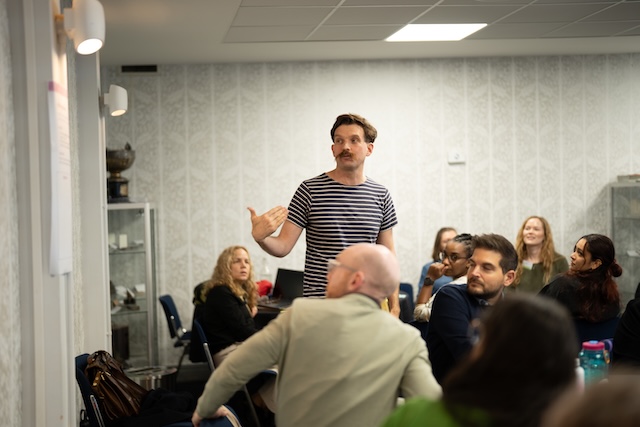
Last week I had the privilege of facilitating an afternoon session for the Engineers Without Borders UK Systems Change Lab in London.
This is such a powerful initiative. It is an action-led community whose purpose is to make global-responsibility the norm in engineering. In their previous meet-up in Birmingham, participants had designed a new community structure. My role this time was to bring that structure to life so people could feel how it might work in practice.
The community structure has three levels of engagement:
- membership;
- action groups that self-organise around specific themes; and
- a steering group.
Sounds great — but does it feel like? How might it work? Where do people see themselves fitting in?
Three-part facilitation
Affinity Clustering
We began with one of my favourite warm-ups — walk around the room, catch someone’s eye, do a little hop — to set the playful tone from the start.
Then came affinity clustering. Participants walk around the room with a large sticker on their chest saying a topic they are interested in exploring in the lab. The aim is to congregate with people with related themes. I called ‘twist’ a couple of times to give players the chance to try out different group configurations before settling where they felt the strongest pull
Simulating an action-group meeting
Newly formed grouped explored their shared interests and how they could collaborate to take action on this theme. Each group chose someone to be their representative at the steering group meeting.
A steering-group fishbowl
The representatives from each action learning group gathered to form the steering group, and held a live meeting in the middle while others observed. Onlookers outside the fishbowl could pause the conversation and offer reflections.
Across these three stages the community structure came to life. People could feel the dynamics, understand the logistics and make suggestions for how to make it better.
The fishbowl in particular opened up important early questions:
- How much autonomy should the action groups have?
- How much should the steering committee steer or respond?
- How does information get communicated across the whole Lab?
These are important questions in any organisations, but particularly ones that are action learning and self-coordinating.
If you’re interested in the EWB-UK Systems Change Lab, you can join their mailing list here: