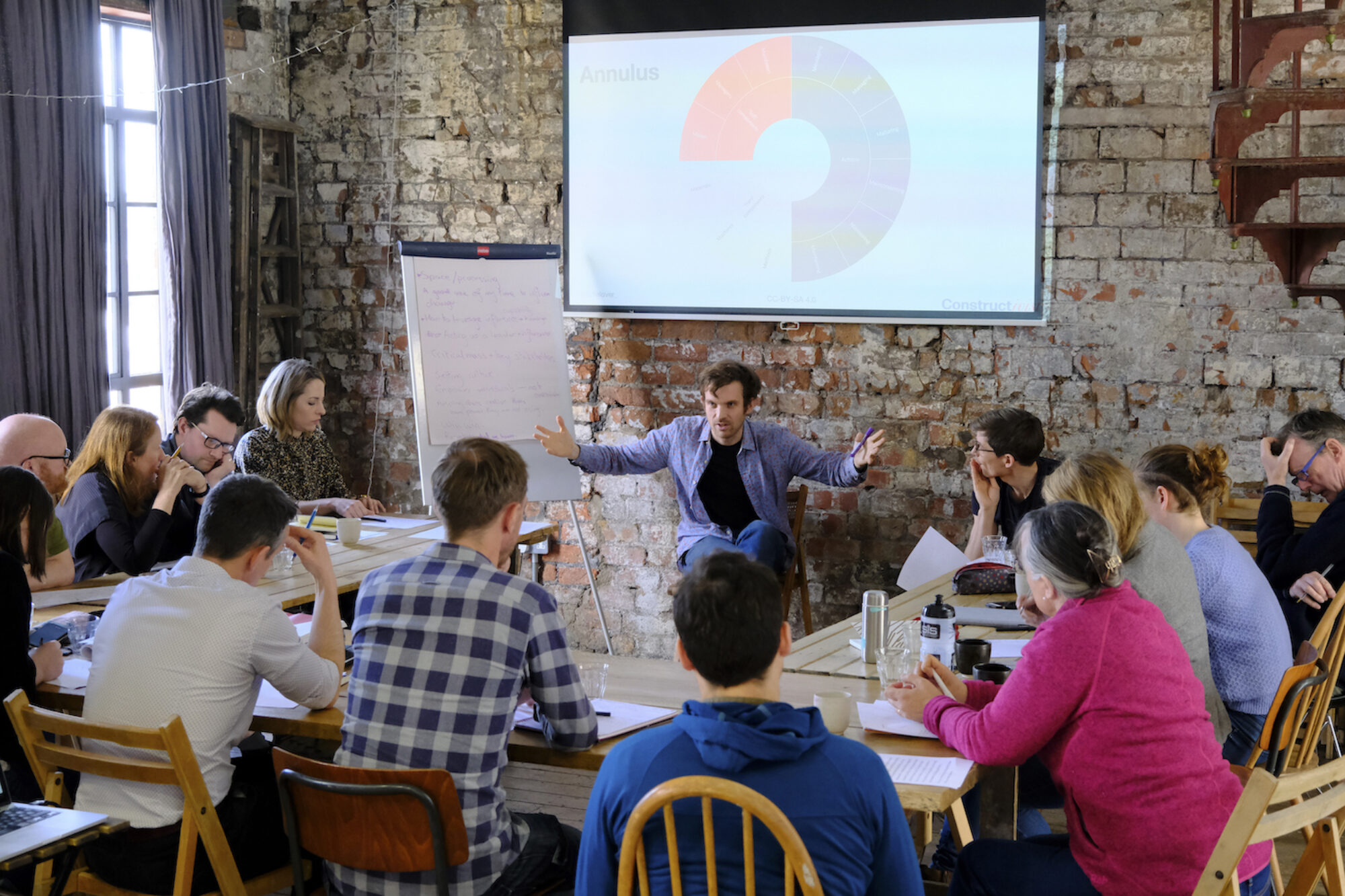

Autumning – preparing for Cohort 6’s final RDL residential.

As it begins to feel – finally – like Autumn in the south of England, we are preparing to return to Hazel Hill Wood for the final residential of the Regenerative Design Lab programme for Cohort 6.

It is the beginning of the end of this programme for this group of practitioners.

Over 8 months, two residentials, four online sessions and numerous action learning meet-ups, this group has experimented with putting regenerative practice in action.

Now comes the time of harvest. A time to gather ideas explored, experiments proposed, discoveries made. Plans proposed in the potential of spring and grown with the energy of the summer.

And then we begin the autumn process of dismantling. A process of ‘autumning’. The disassembly here is of the facilitated support that this group has received by signing up to the Lab, so that too can renew over winter ready to support two new groups in 2027.

But what remains is the autonomous network among this group of participants that has grown, connections that will allow regenerative design experiments to continue and grow way beyond the Lab.

Riding the wave

I spent most of yesterday afternoon up to my middle in waves learning to surf [this is a repost from the archive, so this didn’t actually happen yesterday!]. I’ve got a long way to go. So it is no coincidence that today’s post is about waves. Not necessarily physical waves but the waves we experience as humans. 

As James Norman and I set out in our book, the goal of regenerative design is for humans and the living world to survive thrive and co-evolve. If we are thinking about human thriving then we should consider how we, and the people around us, experience a whole series of waves through our lives. The daily cycle of night and day, the menstrual cycle, the seasonal cycle and the cycle through the different phases of life. These cycles are waves with peaks and troughs. Trying to flatten them or ignore them by pretending that all things are constant stresses the system.  Maintaining a high level of work when there is no energy in the system can be damaging. Equally having an abundance of energy and no means to dissipate it can also cause damage.

Much better is to try to work with energy of a system when it is available and use the downtime to recover. 

Imagine a graph showing the power of two systems over time. One system has moments of high power and low power. The other system just operates at a constant power level that is the midline of the peaks and troughs. 

The total area under these two graphs (which represents energy of each system) is the same. 

If we have a system that is trying to run with oscillating levels of available energy and we try to flatten it, we risk damaging the system without gaining any more energy.

When we are thinking about how to organise our own work and how we collaborate with others, it is much better to ride the wave of available energy. Whether that’s through tuning in to our own daily, menstrual, seasonal or life cycles. Or through providing allyship to how others experience theirs. 

Riding the wave is also much better for surfing. Sadly, I’m a long way off riding it for very long.

This post originally appeared on eiffelover.com in September 2024.