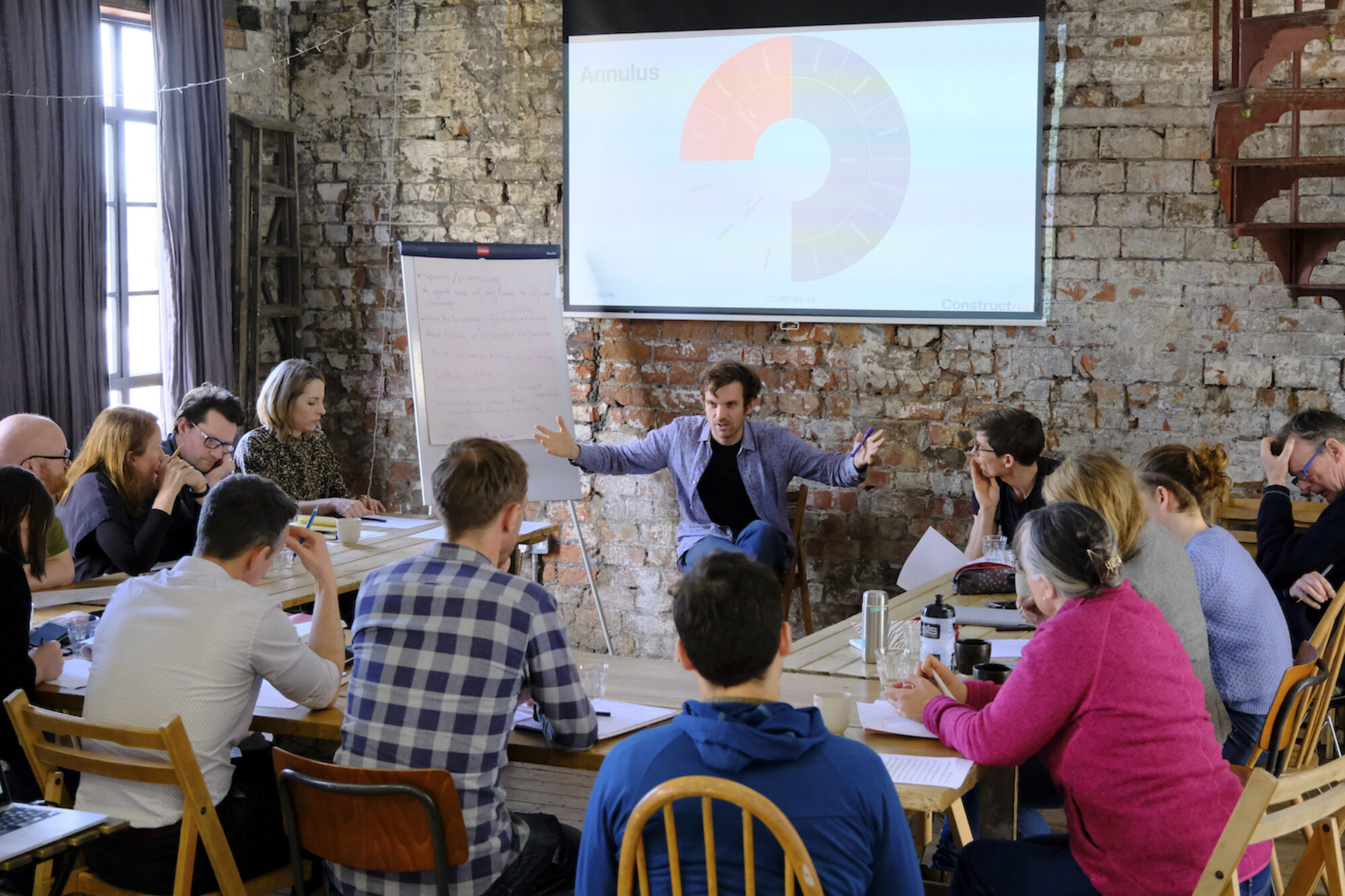

In the Get It Right Initiative leadership workshops we spend time talking about behaviour, and time talking about process. Today I made an interesting discovery when I accidentally squashed the two together.
This is about our complicity in crap processes.
In the behaviour section, we use a simple model that looks at behaviour across two axes:
helpful — unhelpful and agreement — challenge.
This gives us four familiar modes of behaviour:
- Helpful agreement
- Helpful challenge
- Unhelpful challenge
- Unhelpful agreement
We spend particular time on unhelpful agreement: situations where people go along with something they know isn’t right. The aim is to help people shift towards helpful challenge — speaking up to find a better answer.
What usually emerges is that unhelpful agreement thrives where people feel psychologically unsafe, undervalued, or resigned. Helpful challenge, by contrast, requires psychological safety, being listened to, and a sense of agency.
So far, so familiar.
We then normally move on to talking about ineffective processes. But today, by accident, I left the behaviour chart on the wall.
That’s when something clicked.
Participants quickly identified that continuing to use an ineffective process without challenging it is itself a form of unhelpful agreement.
More than that: managers who allow crap processes to persist on their watch are actively creating the conditions for unhelpful agreement—particularly a lack of agency that easily tips into cynicism.
I immediately recognised this pattern from many infrastructure projects: people bogged down by systems that don’t help them. And yet, in other situations, I’ve seen managers who quietly go the extra kilometre to make things work for their teams. The difference in morale is always obvious.
So this is a plea.
If you’re a manager whose staff have to follow processes, help your team’s morale by remembering Oliver’s process mantra:
Use it. Improve it. Or remove it.
Anything else is unhelpful agreement.