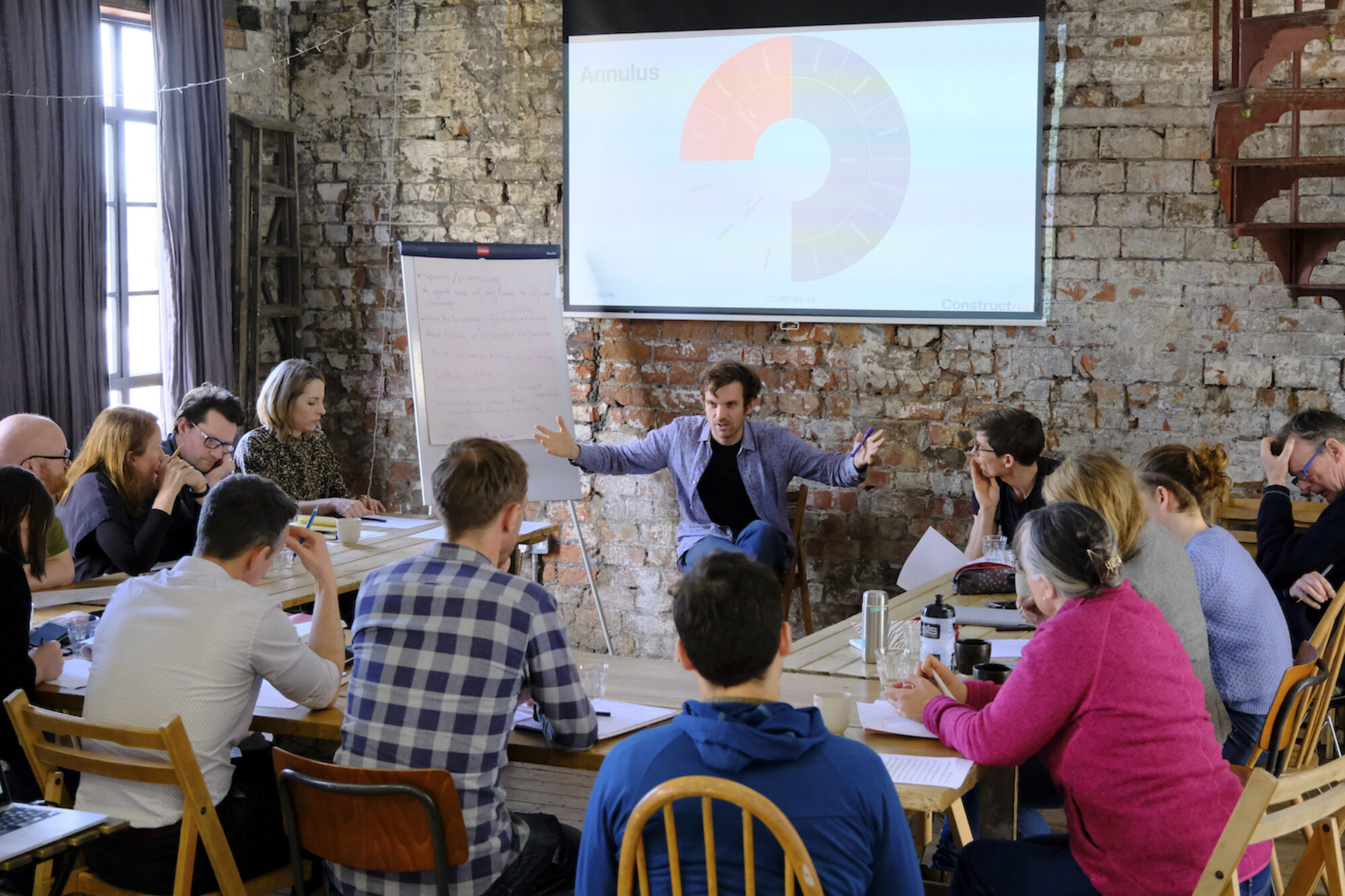

Next week we begin a new experiment at the Regenerative Design Lab: we are starting our first alumni cohort.
Cohort 7 will be for returning practitioners — engineers (and other humans) who have been through the Lab before. Some applied as long ago as 2022.
That wasn’t so long ago in terms of building design ago, but in the field of regenerative design, which is emerging quite quickly, it feels like an age away.
In those first discussions, we had a strong pedagogy of enquiry, but the language was still forming and the frameworks emerging.
Since then the field has moved on and so have we. We have much better models and clearer patterns to work with. The connection between regenerative practice and day-to-day business can be more clearly articulated.
But more importantly the participants have moved on.
They’ve been in practice. They’ve tested ideas. They’ve discovered where the limits really sit and where they have been able to push.
And the operating conditions have changed too. The urgency has deepened. The need for thinking that is life-enabling rather than life-depleting is more acute.
So while Cohort 7 is a second journey, it is not a repeat because we return with more experience, new questions and opportunities.
This year we are also running Cohort 6 – our latest open cohort – in parallel. There’s something powerful I n this too: two groups moving through similar terrain but at different stages in their path. We’re curious to see what synergies develop between them, especially as we bring the two cohorts together for our final even in November.
Regenerative design is rooted in loops and cycles. I’m looking forward to seeing what this second cycle yields for our Cohort 7 participants.