
Another frequently asked question at the talks I was involved with this week: what is the biggest factor blocking regenerative design.
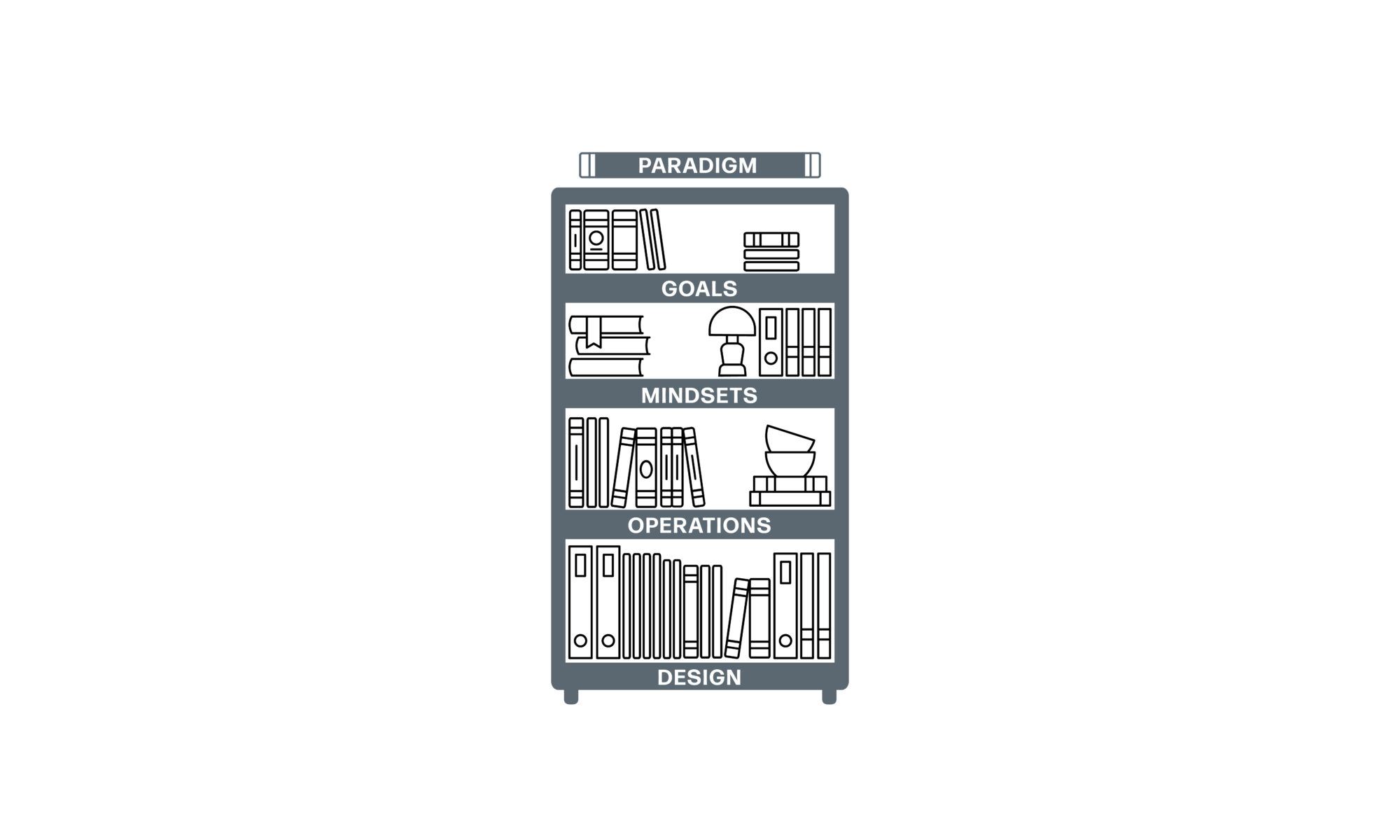
I used the Systems Bookcase to help me answer this one.
In this model, the books on the bottom shelf represent the things we get to build.
But what we are and aren’t allowed to build is governed by the shelf above: operations.
- Planning policy.
- Supply chains.
- Codes.
- Assurance processes.
- Risk models.
If the operating rules say no, the building never reaches the bottom shelf.
But those operational rules are themselves shaped by broader mindsets:
values, assumptions, ethics, beliefs about what matters and what is possible.
As we move up the bookcase, we encounter bigger and more influential forces shaping what design is permitted to become.
The point I made is that the key blocker will be different in every context.
In one place it may be insurance.
In another, procurement.
Elsewhere, culture, incentives, fear, or simply imagination.
The role of the regenerative designer is to identify the book that is blocking the change — and then work systematically to change it.
This work is guided by our collective hopes for the future, juxtaposed by the realities of the present. And it in this tension that we do our work.
For every meaningful change we hope to make, there is usually a book in the way.
If there weren’t, the change would probably have happened already.
But books can be rewritten.
And how quickly that happens depends on the work we are collectively willing to do.