
On a new term and the Three Horizons pencil case

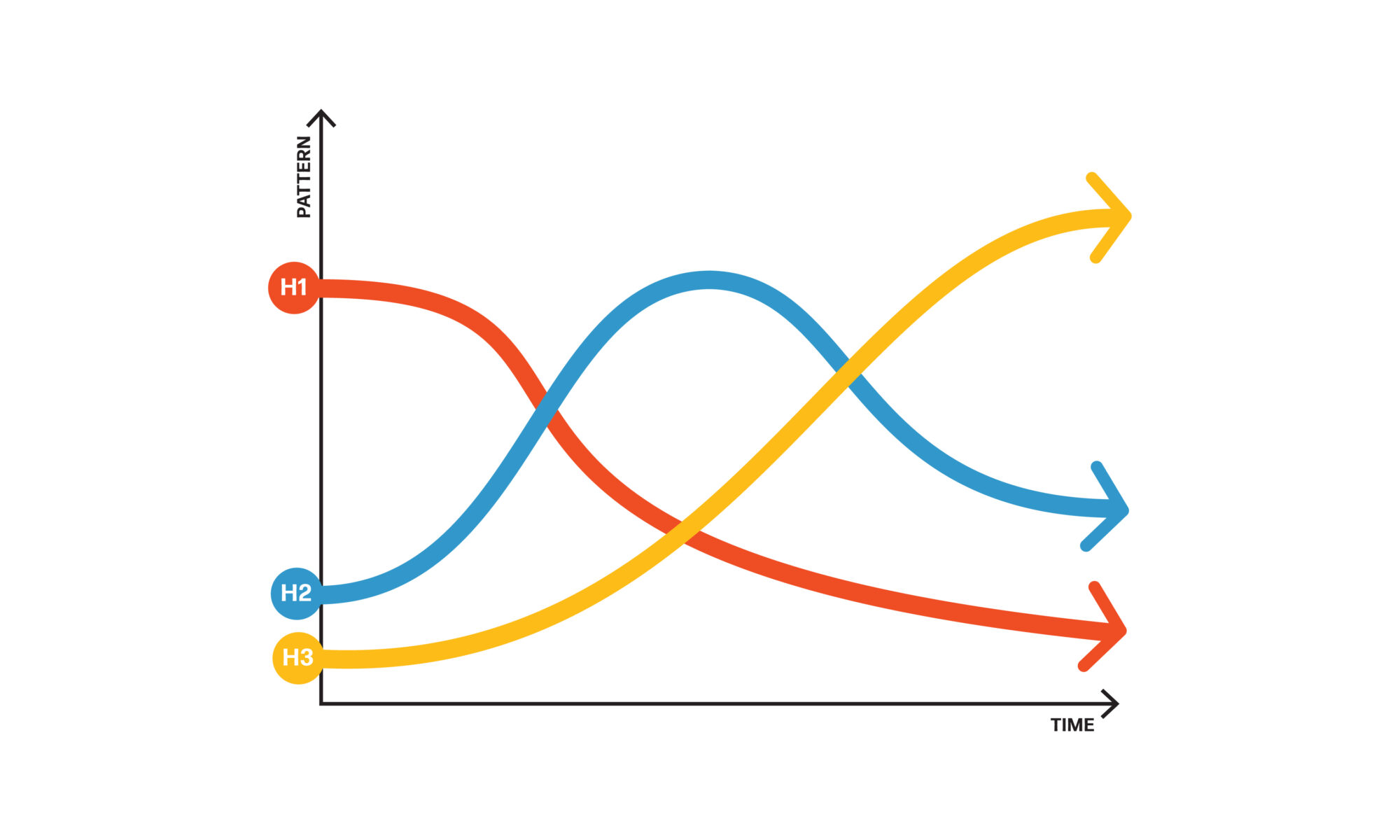
Diagram of the Three Horizons model with three overlapping curves labeled H1 (red), H2 (blue), and H3 (yellow), showing how different patterns rise and fall over time.

It is hard to escape the idea that September is a new year. It’s a time for new stationery and new intentions.

But when resolutions for the year ahead crop up, the Three Horizons reminds me that what appears new was set in motion a long time ago, what is current will not last and what we do now sets the seeds for the future.

There is in fact very little that can be decided now; that can be implemented suddenly from here on. To do so is to shock the system. It can look effective but it can cause hidden stresses as things bend to your will. Often we can only sustain this pull into the opposite direction until the yoke of the system pulls you back in its direction.

What the Three Horizons shows us is that in fact everything is in flow. What’s better is to work with the currents of change, to notice trends, to know your destination and to seek to steer things in that direction over time.

In the Three Horizons pencil case, 

  • The red pen is for what is current that will decline. In the season ahead, some things will give way. These are things that may have run their course or that have become unstable. 
  • The blue pen is for the incoming — that which is taking the place of what is in decline. It is recognisable but it is different; it has been growing for some time; and it is distinct in some way that makes it more suited to the year ahead. 
  • And the yellow pen is for what we are planting now and what is slowly awakening that will take the stage next. 

In every new season, we can see the red pen that’s beginning to run out of ink, the blue pen getting to flow and the yellow pen beginning to make its mark.

The work of change is daily work — not a single decision on the eve of a new cycle but an ongoing act of noticing what’s in decline, what’s emerging and thinking about where to make your mark.
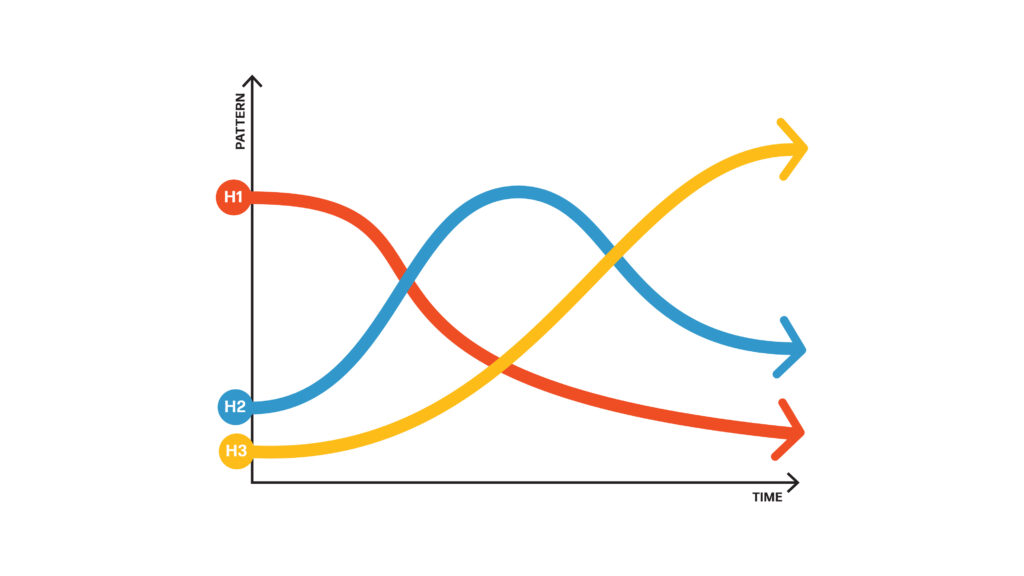
Diagram of the Three Horizons model with three overlapping curves labeled H1 (red), H2 (blue), and H3 (yellow), showing how different patterns rise and fall over time.

Check out the Three Horizons in our new Tools for Regenerative Design page.
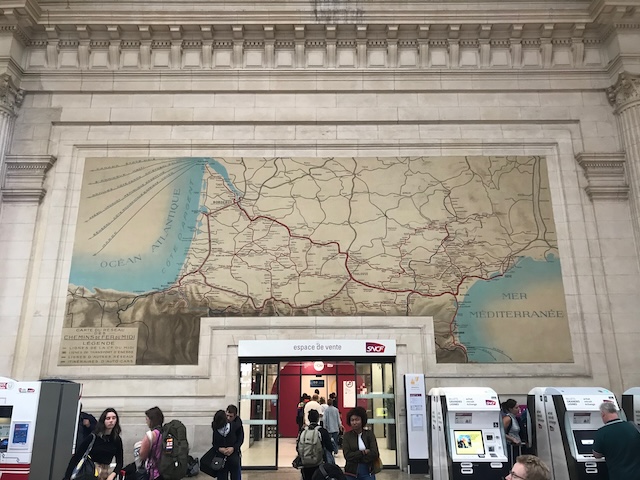
Horizon One Highway

In the Three Horizons model, Horizon One is the world that surrounds us — the one that grabs our attention, dominates our habits, and shapes our worldview.

Because it fills our field of vision, Horizon One obscures our view of possible alternative futures. 

Earlier this week I wrote about cognitive ease — the brain’s tendency to favour familiar options over ones that require more thinking effort. It’s the easy option of taking the familiar path, rather than the harder work of beating a new one. 

Horizons One is the beaten path. It’s the default route; the easy path.

But if we want to move towards a thriving future — one in which our work as designers and builders actually creates life and strengthens our communities and ecosystems — we need to beat a different path. And we need to do it every day. 

That takes effort and resourcing. 

We need time to reflect. We need time to rest. We need space to notice is what is missing and to dream about what is possible. 

And we need the nourishment of living things and the nourishment of community. 

Resourcing ourselves can help us resist the daily pull of the familiar. And we can keep searching for paths towards more thriving futures, even when walking down the Horizon One Highway looks like the much easier route. 

The Map Room – mapping systems, horizons, and change

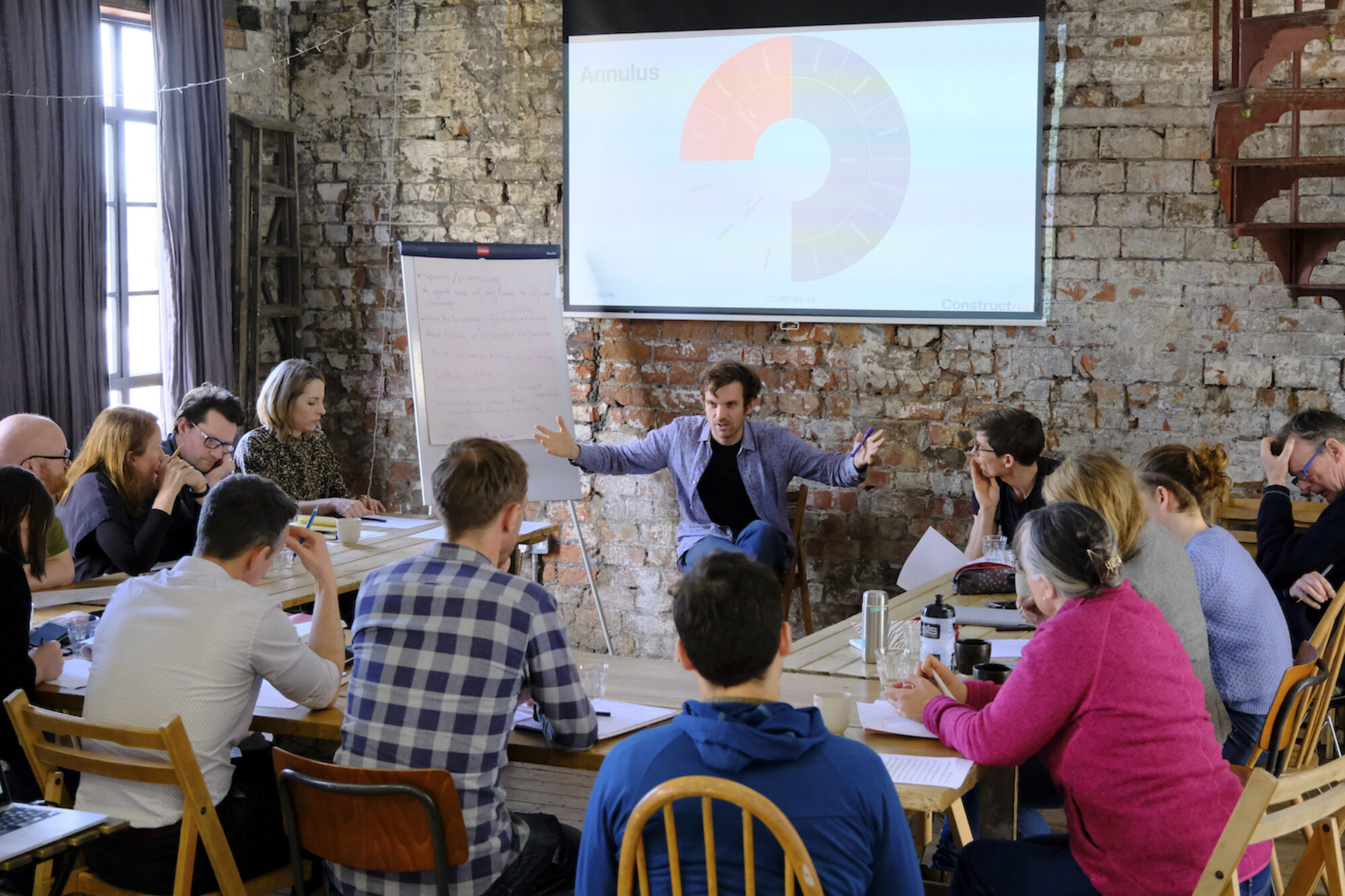
This week we ran The Map Room, the second workshop in our Critical Thinking for Engineers (and Other Humans) programme. If the Observatory was about looking outwards, this session was about making sense of what we’ve seen—mapping the system, tracing its logic, and finding out where we might start to make change.

We explored:

  • The Systems Bookcase model: a tool for organising system layers, from what gets built through to the values and paradigms that shape it.
  • The Three Horizons framework: helping participants spot signs of long-term change—and understand their own role in it.
  • The Library of Systems Change: a way of recognising how future practices are already quietly present in today’s systems.

Some of the most powerful insights came when participants started applying the tools to parts of their work they hadn’t considered “design” before—like internal policy, comms strategies, or team culture. It was a reminder that systems thinking isn’t just for buildings or infrastructure—it’s for how we work, organise, and evolve.

We also talked about system boundaries, shifting roles, and what it means to design something that doesn’t just meet a brief, but changes the system the brief sits inside.

The Map Room builds on the Observatory, taking data and analysing it in readiness for the Decision Engine, where we decide on the next course of action to take. That will come later in June.