
Featured on the cover of this month’s Structural Engineer magazine is the new boathouse for Newnham College in Cambridge.
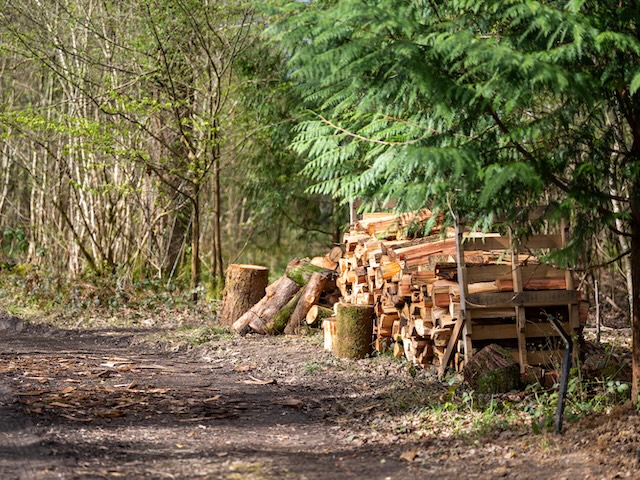
The boathouse is a small timber structure designed to house rowing boats. Faced with conflicting constraints — a short-term lease, high design expectations and nearby tree roots — the team moved away from a more conventional steel solution and instead developed a locally sourced green timber structure designed for disassembly and reuse.
From a regenerative design perspective, what stood out to me was not simply the use of timber, but the wider system of relationships and decision-making around the building.
Here are a few headlines.
Constraints driving creativity
The idea that constraints drive creativity is not new.
What is striking here is how the constraints pushed the design team away from a Horizon One answer — resource-intensive materials, sourced from far away with little relationship to this place — towards a Horizon Two response that begins building local procurement, resource circulation and habitat sensitivity into the process itself.
So often constraints limit experimentation.
Here they helped create the conditions for it.
Sustainability high on the bookcase
Another striking aspect of the project is that sustainability appears to sit relatively high in the system.
The article notes that the idea of an eco-friendly boathouse “captured the imagination” of the college. That matters because once sustainability, experimentation and design quality become institutional goals — rather than bolt-on requirements — different decisions start to become possible lower down the Systems Bookcase.
Material possibilities grow. Procurement appetite shifts. Adaptability and local supply chains become easier to justify.
Change higher in the system changes what can emerge below.
Capacity to change
The building is designed for adaptability within a changing environment.
Screw pile foundations can be removed.
The timber frame can be dismantled and rebuilt elsewhere.
Connections can be adjusted as the timber seasons and matures.
This is not a building conceived as fixed until redundant.
It is designed to change over time.
Local capability and supply chains
The work also helped build local capability, including visual stress grading of timber at Rougham Estate.
The development of skills, confidence and supply-chain relationships becomes part of the design itself.
Recovering historical practices
Rather than inventing something entirely new, the project revives older forms of local timber construction, stewardship and repair culture that have largely been displaced by industrial standardisation.
Place-responsive design
The form responds to the surrounding boathouses, local materials, nearby trees and conservation setting. Inspiration even emerged from a walk in a local park. A partial move towards Continuous Place-Based Design.
Protective niche
Projects like this often emerge within protective niches in the wider construction system.
Institutions such as university colleges can sometimes sustain different priorities — legacy, experimentation and identity — that allow alternative approaches to be tested before they become commercially normal elsewhere.
These niches matter. Like in ecosystems, protective niches create sheltered conditions in which new operational models, relationships and design approaches can develop enough confidence to spread more widely later on.
A useful H2 transition example
Overall, the project does not transform the wider construction system around it.
But it does prototype alternative ways of sourcing, building and thinking.
This is not simply a low-carbon building.
It is an example of Horizon Two transition-building: developing the operational capability, relationships and confidence needed to make different kinds of projects possible in future.