Spring at the Regenerative Design Lab

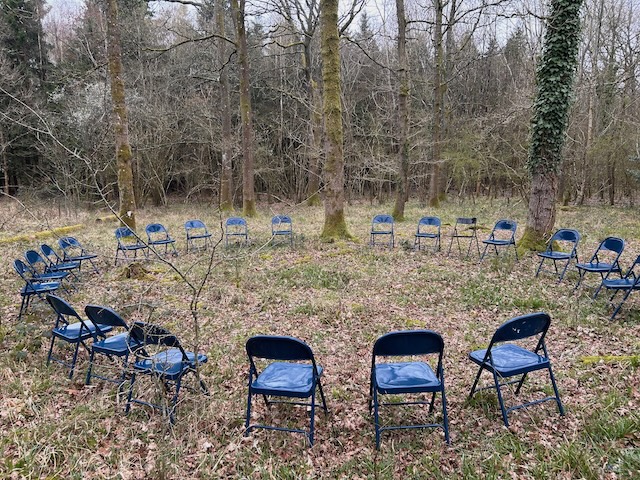
20 people sit in a circle.

The chairs are arranged between seven oak trees, right at the edge of Hazel Hill Wood — the home of the Regenerative Design Lab.

20 chairs in a circle by the Gatekeeper tree at Hazel Hill Wood

It’s a deliberate place to start. For many, it’s the first time meeting each other face to face. And the first time meeting the wood.

Because the wood isn’t just a venue. It’s part of the work.

A thriving ecosystem. A container for learning. A place for discovery. A reminder of abundance, complexity, and timescales far beyond our projects.

And so we begin our inquiries here — deliberately stepping away from the pressing needs of day-to-day work, and into something slower, more exploratory.

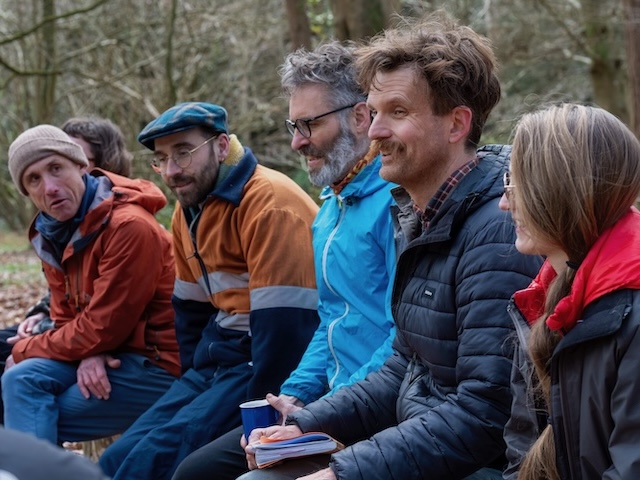
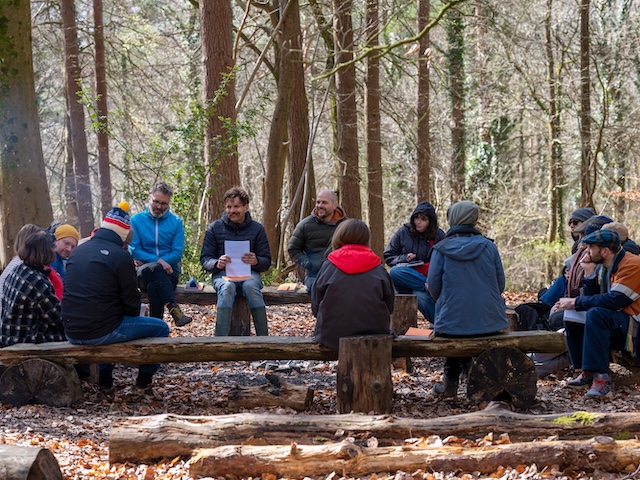
Lab participants gather around the fire to discuss how regenerative design relates to their work — photo credit, Steve Cross

We don’t pretend the real world works like this. But this is a place we can return to — for perspective, recovery, and renewed energy to carry on the work of system change.

Everyone arrives with a Pattern from the Pattern Book, chosen as a guide through the Lab.

Over the first afternoon, we move through the wood. Three distinct habitats, each chosen to represent a different regenerative mindset. Each paired with a simple game and time for reflection.

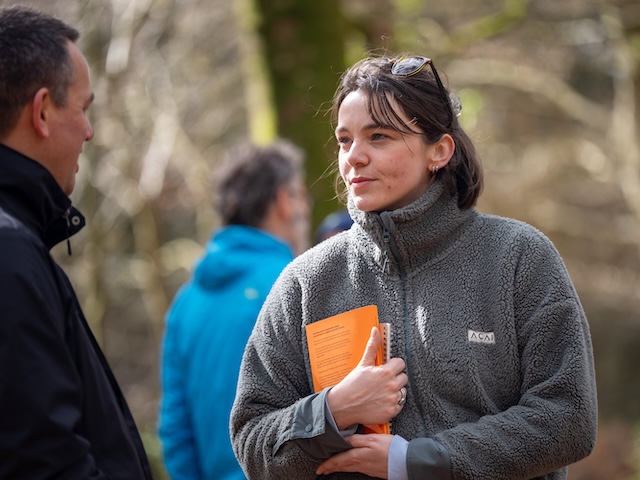
Two lab members in discussion during one of our exercises exploring mindsets for regenerative design — photo credit, Steve Cross

Some of the work is quiet. Observing. Noticing.

Some of it is more active — testing ideas, asking questions, beginning to see how each person’s inquiry might take shape.

And some of it is unexpectedly playful.

There are moments of seriousness — conversations about organisations, systems, and the challenges of making change stick.

And then, at other times, we find ourselves in something like satsuma jousting.

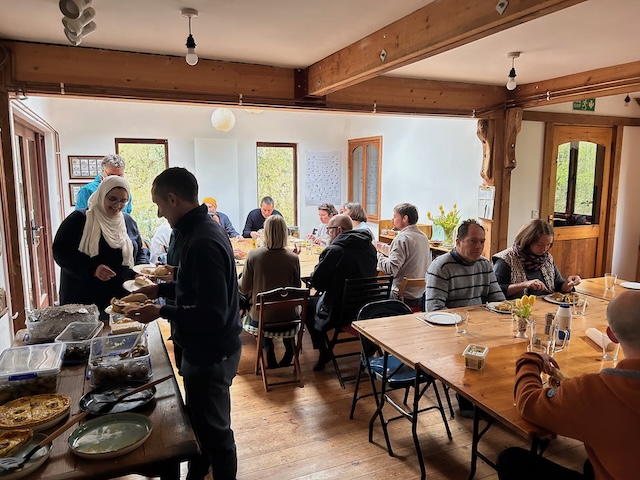
Delicious food and lots of it — a key ingredient of the residentials at Hazel Hill Wood.

It’s easy to see these as opposites. But in practice, they are part of the same work. Play creates space. It changes how people relate. It allows new ideas to emerge that wouldn’t surface otherwise.

By the second day, the focus turns more directly to each person’s inquiry.

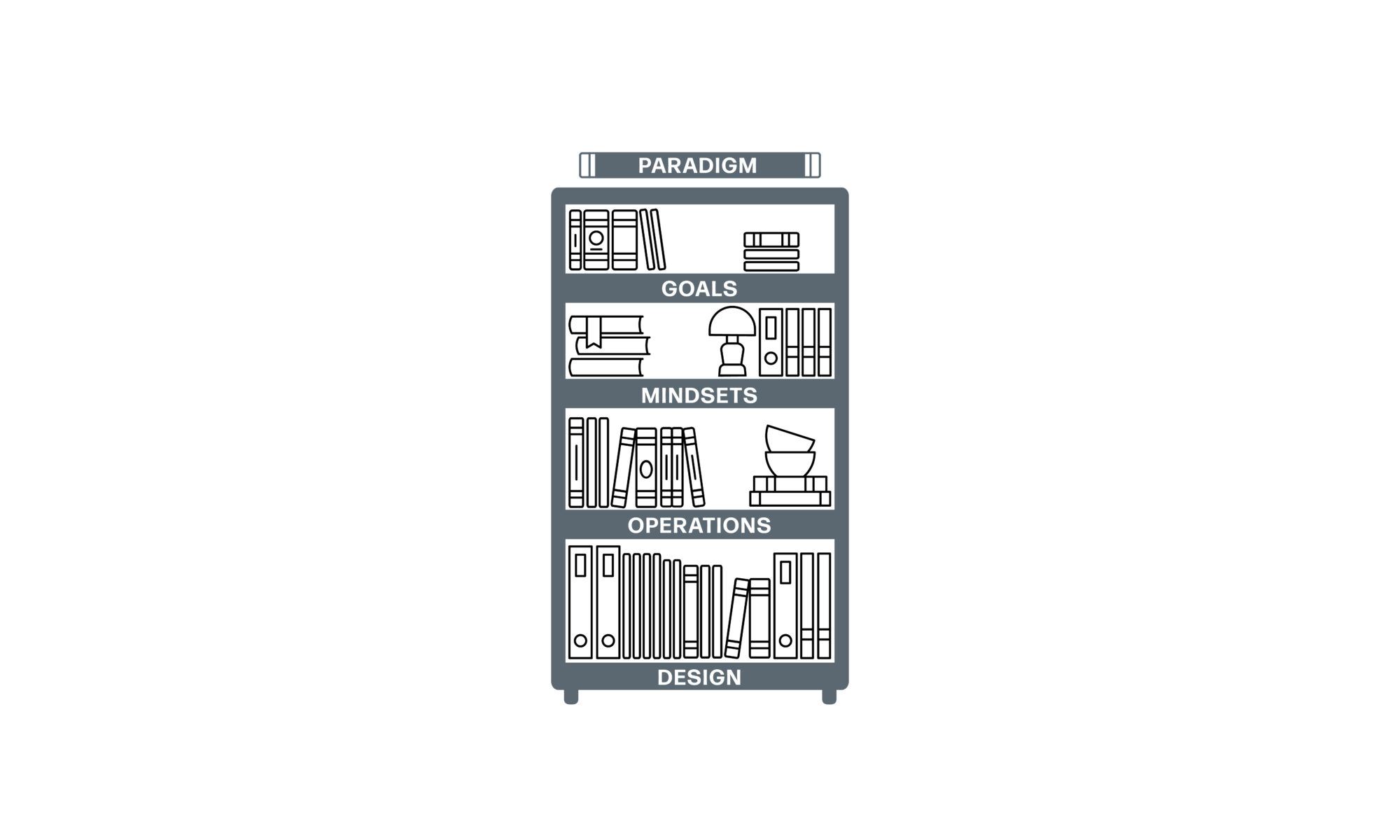
We work with the Systems Bookcase, exploring how different levels of a system interact — from underlying paradigms through to design decisions.

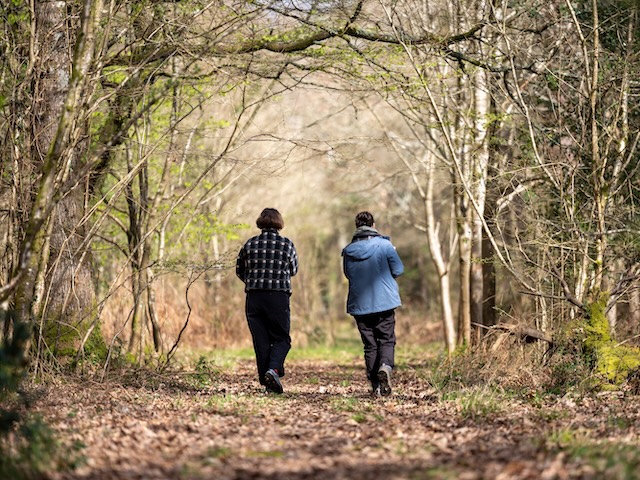
Two people on a reflective walk along a path at Hazel Hill Wood — photo credit, Steve Cross

Then back out into the wood again — in pairs, and then alone.

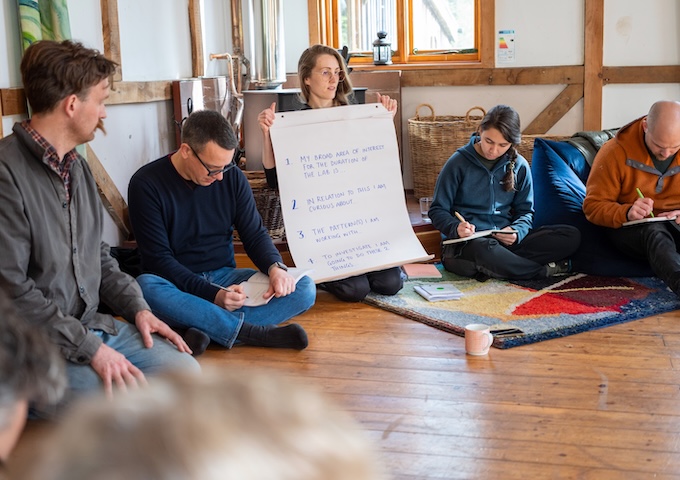
  • Why have I come here?
  • Within this broad area of interest, what am I actually curious about?
  • What pattern am I working with?
  • And what might I try next?
Lab facilitator Ellie Osborne lists four reflective questions for the solo walk in the woods — photo credit, Steve Cross

These aren’t intended to be final answers, rather, best next answers for now.

By the end, the group leaves the shelter of the wood and returns to their projects, organisations, and everyday constraints.

But not quite in the same way.

Because now we are observing, asking questions, looking for opportunities, looking for the lever that we will pull, the change that we will experiment with.

We’ll gather again here in the summer to share what we have discovered so far.

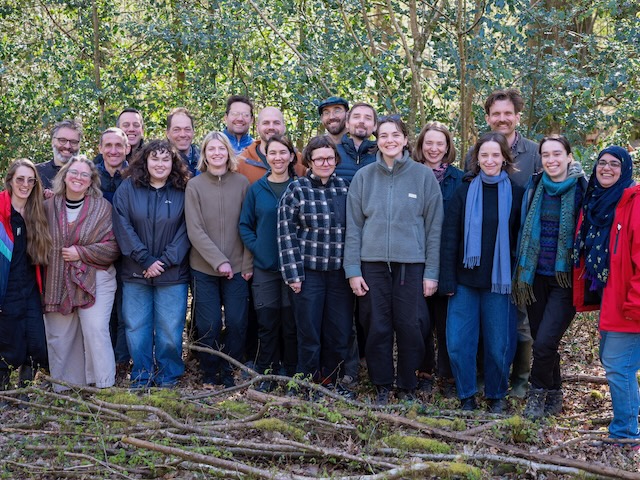
Cohort 6 at the end of their spring residential — photo credit, Steve Cross

Building repair infrastructure

Here are my working thoughts on United Repair Centre, one of the organisations I met at the Future Observatory event The New London Commons: Circular Hubs for Fashion and Construction.

This organisation does not just do repair.

They are building the infrastructure that makes repair possible — at scale — in the fashion industry.

A rich example of both an organisation aiming higher in the system, and the Living Systems Blueprint in action.

In my post earlier this week on steel reuse, I wrote about the emergence of a new ‘blue book’ on the operations shelf of the Systems Bookcase. This is about new operational systems: 

  • Recovery processes
  • Coordination between demolition and construction
  • Storage and logistics
  • New roles and responsibilities

None of this is visible in the final building — it is the hidden infrastructure that enables reuse to happen. 

It is very interesting to see how United Repair Centre is doing taking a similar approach in fashion. 

What’s particularly striking about their work is clearly it reflects the Living Systems Blueprint in action, building:

  • Interconnection
  • Symbiosis
  • Capacity to change

Interconnection

At a materials flow level, there is the connecting together of a waste stream with an input stream. 

But that means connecting many more stakeholders: 

  • Customers
  • Brands
  • Repairers
  • Logistics

And rather than disposable clothing from anywhere and thrown away to anywhere, their work reconnects people with the things they own and the people who repair them.

That is interconnection at many levels. 

Symbiosis

Turning a waste stream into a value stream is only the beginning.

From this, positive feedback loops can start to build.

Repair creates demand for skills.

Skills create livelihoods.

As repair becomes visible and valued, the perceived value of repaired goods increases.

Each part begins to reinforce the others.

This is a fascinating collective reversal of entropy — materials becoming more valuable over time through how we organise ourselves to work with them.

Capacity to change

By running a repair skills academy, they are not just building a pipeline — they are increasing the system’s ability to evolve.

Repair skills are adaptable and transferable.

And there is a learning loop between repairers and designers, enabling garments to be designed for repair from the outset.

This is not just a system that produces outputs.

It is a system that builds its own capacity to change.

There is an interesting difference from the steel case. In steel reuse, the enabling infrastructure remains largely invisible. Here, repair is made visible — badges, stitching, signs that say ‘repaired’.

Making repair visible shifts it from stigma to pride. And at that point, we are no longer just working on operations.

We are working on mindsets.

Steel reuse: writing a new blue book

Structural steel reuse is on the rise, as this month’s Structural Engineer articles show.

But what might be seen as a material innovation is actually a shift in something more fundamental.

I see this work as our industry writing a new “blue book” on the operations shelf of the systems bookcase.

In other words, we are building the system that makes it possible for a designer to specify reused steel.

Because to make reuse work, the industry is having to create:

  • toolkits for recovery
  • processes for pre-demolition audits
  • new ways of coordinating demolition and new construction
  • infrastructure for holding and processing stock

None of this is visible in the final building.

But without it, reuse doesn’t happen.

In the systems bookcase, the operations shelf contains the factors that constrain or enable design decisions.

Everything listed above sits there.

In terms of transition, this is Horizon 2 (which we colour blue) — the in-between space where new practices can emerge that are both viable in the existing system but are a significant step towards the system we want to create. 

Let’s be clear: steel reuse is still a long way from being a process that is life-giving.

But it can significantly reduce the embodied impact of construction —

which is, at least, ecological-adjacent.

Is infrastructure alive? — Three mindsets shifts for regenerative infrastructure design

One of my favourite books of 2025 was Robert MacFarlane’s Is a River Alive? and it has been at the forefront of my mind as I try to do the mental work of climbing out of my conventional thinking to imagine what regenerative infrastructure might mean.

Ultimately, it comes down to mindset.

Before we get into the design brief for regenerative infrastructure, it is important to think about the mindset we are bringing to the whole process. 

In the Systems Bookcase, mindsets sit above operational requirements and designs. They shape those requirements, from which everything else follows. The mindsets in turn follow from our goals. 

In regenerative design our goal is for humans and the living world to survive, thrive and co-evolve. 

The trouble with mindsets is they can be hard to see. They are often implicit in the operational requirements that we derive and the designs that follow.

For example, if we can have sustainable add-ons to a project that is inherently not sustainable — like a low-carbon airport terminal — it suggests that the overarching mindsets and goals are not aligned with creating thriving. 

But if we can ask questions that challenge our mindsets right at the start of the project, we can make those mindsets visible before anyone has even realised they are shaping the design.

The Pattern Book proposes three mindset shifts that support a transition to a regenerative economy: 

  • From separation to interdependence
  • From scarcity to abundance
  • From control to emergence

Each of these shifts can be turned into a provocative design question for infrastructure. These questions come before we establish the design brief. They help establish the big questions about what we should be designing and why.

Interdependence – the living world as infrastructure.

Instead of asking, how do we make this infrastructure more sustainable, we ask:
What if the living world were the primary infrastructure?

Rivers, oceans, wetlands, mycelium networks, woodland canopy and the air that surrounds us. These are the nodes and connections of our living planet’s circulatory system.

Instead of designing human infrastructure first and then off-setting its effects, we could start by understanding what ecological processes sustain a place. How do rivers, wetland and coastal systems need to evolve? How do habitats need to adapt. What is needed to enable circulation of water, materials and nutrients?

We then design human systems to be nested within these living systems, and not the other way round.

Abundance – thriving living systems creating wealth

Many industrial systems are occupied with extracting increasingly scarce resources. But living systems have the potential to create huge abundance.

When they function well, living systems create huge wealth:

  • Natural cooling from tree canopies
  • Rich and diverse plant and animal life on land
  • Diverse and plentiful life in the seas
  • A microbial environment that supports our own microbiome
  • Vast amounts of materials that can be harvested
  • Natural cleaning of air and water
  • And ultimately the a complex system of interacting processes that maintain a balanced climate on earth.

Our greatest preoccupation should be how do we enable these living process to function well so that we can live well.

The design question is then not how do we create infrastructure that maximises the extraction and transport of these resources, but rather how do we create infrastructure that supports living systems to create abundance?

Emergence – living infrastructure that evolves.

Conventional engineering assumes infrastructure to be fixed, but the infrastructure of the living world behaves differently – it is alive, it shifts, it adapts to changing environmental conditions.

Rivers shift course. Wetlands expand and contract. Forests shift their make up over a cycle of many decades. Migration routes divert when they need to.

These circulatory systems are a dynamic web that shift across and shape the landscape.

Rather than attempt to control and pin down these systems, the design question becomes how do we restore the capacity of these systems to organise themselves?

Because when these systems function well, we can live well.

Questions to unlock design

These questions are deliberately provocative. The don’t have easy answers we can point to.

That’s the point of design. If we knew the answer before we started, we wouldn’t be doing design — we’d be shopping.

Regenerative infrastructure is, ultimately, the wiring of an economy that creates thriving. If we go into infrastructure design with the assumptions of an extraction-based economy, we will reproduce that system.

But if we question our mindsets, we change assumptions and open the possibility of designing something fundamentally different.

So is infrastructure alive? 

Obviously the concrete, steal and mineral structures that we traditionally build are not. 

But if we step back and ask what broader systems actually enable us to live well, the answer is very different. 

Regenerative design begins by recognising that humans and the rest of the living world must survive, thrive and evolve together. Ours and nature’s systems are not separate — they are interdependent.

That is not how infrastructure is traditionally imagined.

But the first step in designing a viable alternative to is to imagine it. 

Seeing infrastructure as alive, and part of a much wider web of life, is an invitation to imagine things differently, so we can start designing differently.

Aiming Higher in the System

When we try to apply regenerative design at a project level, it can feel like our hands are tied.

The building regs won’t allow it.

I’ll never get insurance for that.

This project is too small to create that sort of change. 

These constraints are real, but they are also information that the leverage need may not sit at the level of the project itself. 

This is why we talk about aiming higher in the system. 

To aim higher in the system is to look at the system of constraints that surround a project — the operating rules, procurement processes, risk appetite and supply chains — and work to change those. 

This work may look different to the work we normally do. It might involve creating new relationships, developing new processes, challenging big assumptions. 

It may not look like regular design. 

Which is why ‘aim higher in the system’ sits at the top of the Brief for Thriving. If we can influence over the higher shelves on the Systems Bookcase — the operating rules, mindsets and goals — then we can begin to change what gets built, and critically, the impact of building stuff.

Regenerative design is systems change. We have to work higher in the system to ensure that what we build actually makes the world better.

On transforming time and system immunity

Malcolm Gladwell claimed in his book Outliers that it takes 10,000 hours to become an expert in something. 

How many days is that?

How many years?

It’s not quick to flip between these very common units of time. Unless we are very good at multiplying and dividing by 24 and 365 respectively. 

The answer is 416 and 2/3 days.

Which is equivalent to roughly 1.14 years.

Solid. No time for breaks.

But the point isn’t about how long this is or with Gladwell’s theory is true or not. My point is, isn’t it strange how awkward it is to convert between our common units of time.

This was sorted out for distance a long time ago. Metres, millimetres and kilometres are easy to switch between: just move the decimal point three spaces to the right or left. 

Why don’t we have this same simplicity for time?

I had been aware of the creation of a calendar based on 10-day weeks in post-Revolutionary France. This calendar was in use for about 6 years, and is in itself a fascinating story. 

But I hadn’t realised until this weekend that during a similar period there was a decimalisation of time. Under this model:

  • A day is broken into ten hours
  • Each hour has 100 minutes
  • Each minute has 100 seconds

With this system, the unitary conversions are easy. If someone were to say that something will take 10,000 hours, you can quickly step up and down through the different units.

  • 1000 days
  • 10,000 hours
  • 1,000,000 minutes
  • 100,000,000 seconds.

Very sensible for quick calculation. No calculators necessary!

But the new system was not popular. The wikipedia page on decimal time cites a paper presented by C.A Prieur at the French National Convention on why decimalisation of time is not a good idea. And the reasons given present a good example of ‘system immunity’ – why systems resist change.

Here are a few of the reasons listed:

  • Since time is not commercially regulated (unlike say, weights and measures), there is no enforcement and so the old system will remain in use. Using our Systems Bookcase model, here the operating rules don’t reinforce the new design. Equally there is no rule stopping the use of this new system — but nothing to help it punch through either.
  • The rural population does not need such an accurate measure of time, and so are unlikely to use the new system. This is an example of there being no reinforcing feedback loop in the system. Shifting to the new system does not confer any benefits to these users, so its uptake will not naturally emerge. 
  • Watches are people’s most expensive possessions – asking people to buy a new watch by decree is not likely to be popular, unless it is supported and comes with a benefit. This is an example of both capital investment and pride.

These are examples of where the purity of an abstract idea meets the realities of the present. 

But is it the present that is the problem, or is it the idea? Because it is only in practice that things work. 

Forcing an idea into a system that doesn’t want it will take energy. If that energy delivers a yield, then it can be overcome. But if there is no benefit, the system will snap back. 

As it stood, decimal time lasted 6 years before it was abandoned.

How many hours is that? That may take some time work out in my head.

Clash of system goals

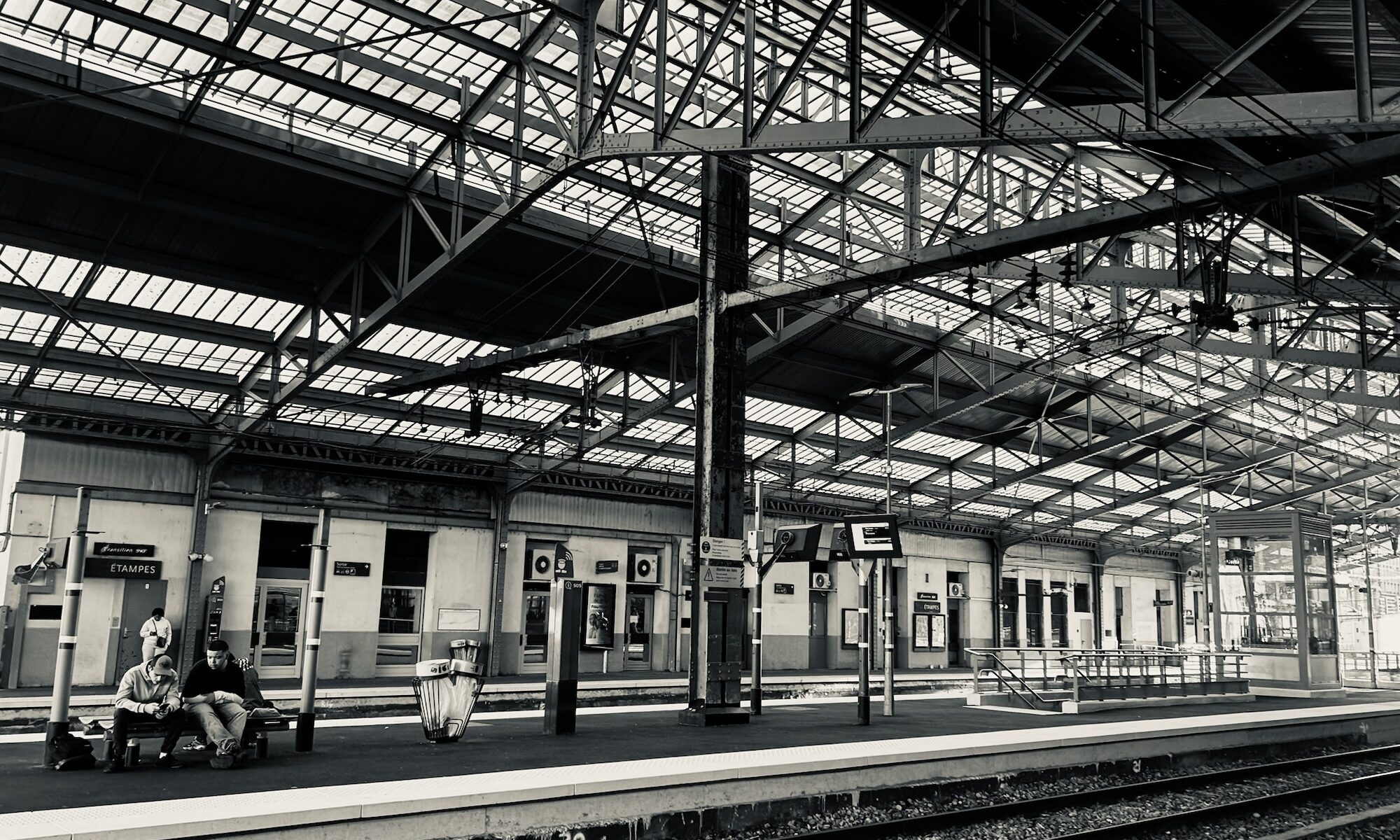
I took this photo at Étampes station. It shows a nineteenth-century roof that spans four platforms with no internal columns. And then, right in the middle of that column-free space, stand the massive posts that support the electric cables — added in the 1920s.

It’s a clear clash of system goals.

The roof was built to create a grand civic space — a place that celebrated the station as a node of travel and encounter.

The cable gantry belongs to a different system altogether: it’s about maintaining a rigid, continuous grid for electrical power.

In the first, place is what matters.

In the second, continuity is what matters.

Retrofitting the roof to carry the cables would have been expensive, yes. But the network engineers could at least have designed special gantries for inside the station — ones that respected the goal of place while still meeting the goal of network.

The station architects began with a blank sheet of paper and could design more or less what they wanted.

The electrification engineers didn’t start with a blank sheet, but arguably designed as if they did.

We rarely start with a blank sheet of paper. Existing and new systems bring different goals. Our task as designers is to reconcile those goals through better design.

The Map Room – mapping systems, horizons, and change

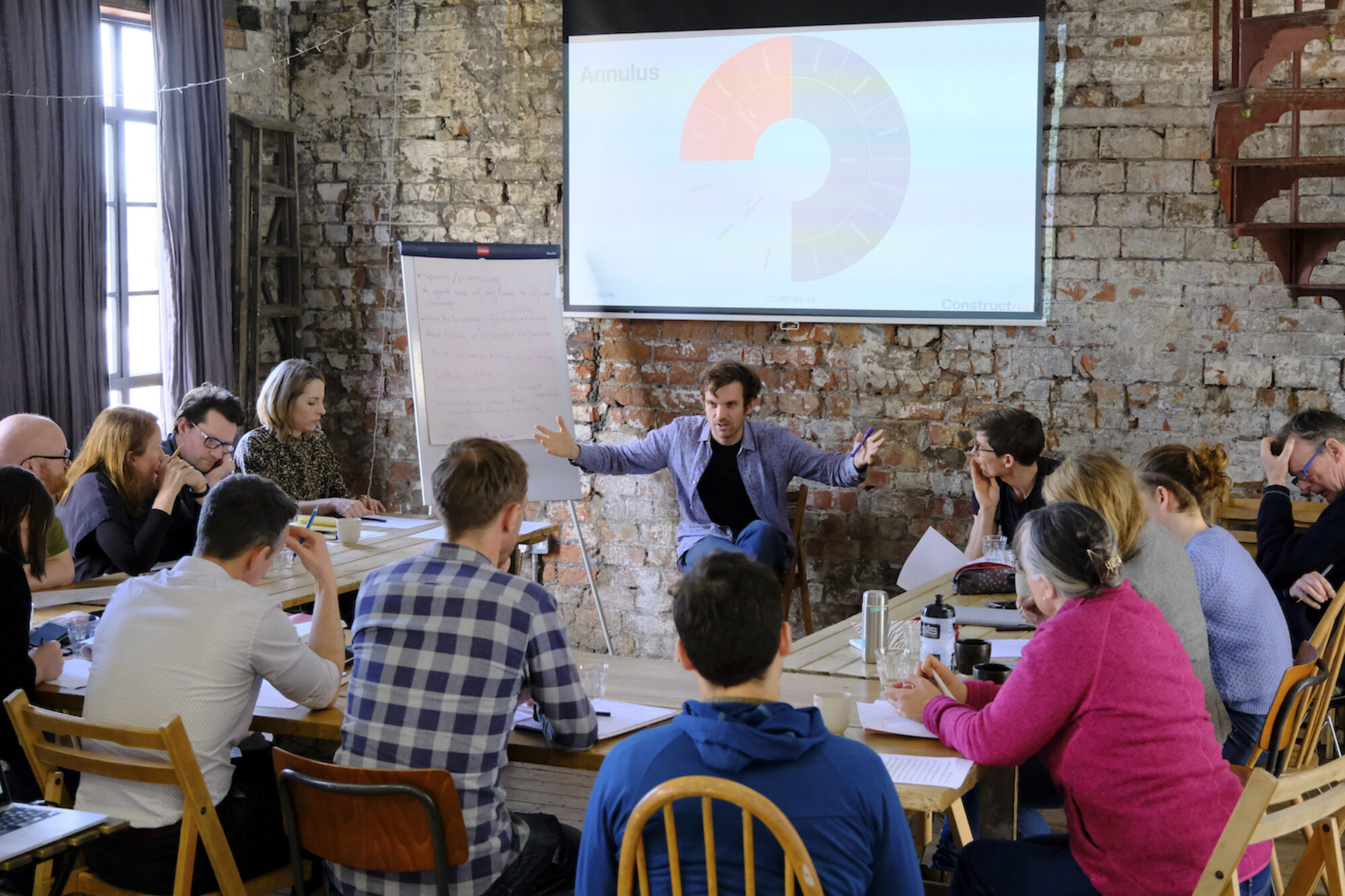
This week we ran The Map Room, the second workshop in our Critical Thinking for Engineers (and Other Humans) programme. If the Observatory was about looking outwards, this session was about making sense of what we’ve seen—mapping the system, tracing its logic, and finding out where we might start to make change.

We explored:

  • The Systems Bookcase model: a tool for organising system layers, from what gets built through to the values and paradigms that shape it.
  • The Three Horizons framework: helping participants spot signs of long-term change—and understand their own role in it.
  • The Library of Systems Change: a way of recognising how future practices are already quietly present in today’s systems.

Some of the most powerful insights came when participants started applying the tools to parts of their work they hadn’t considered “design” before—like internal policy, comms strategies, or team culture. It was a reminder that systems thinking isn’t just for buildings or infrastructure—it’s for how we work, organise, and evolve.

We also talked about system boundaries, shifting roles, and what it means to design something that doesn’t just meet a brief, but changes the system the brief sits inside.

The Map Room builds on the Observatory, taking data and analysing it in readiness for the Decision Engine, where we decide on the next course of action to take. That will come later in June.