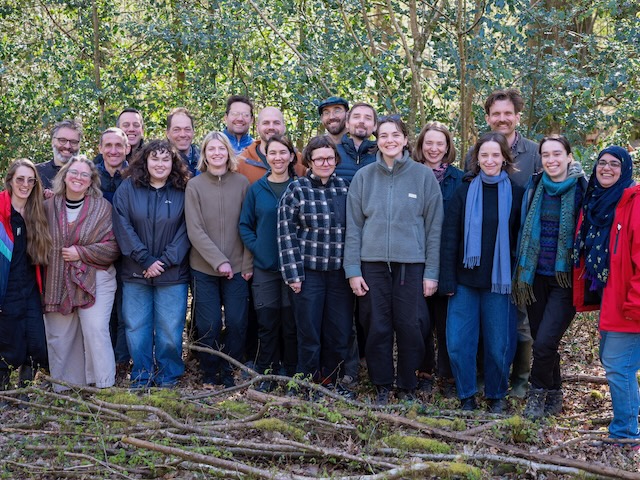

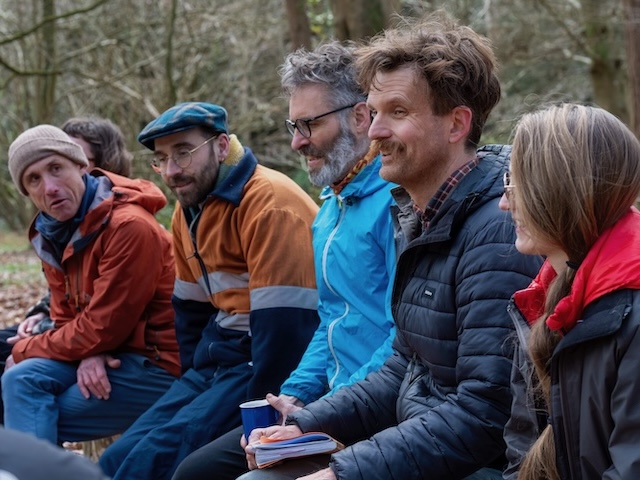
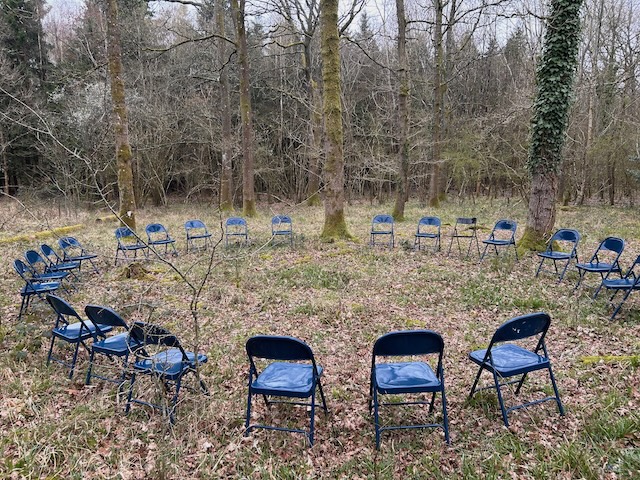
20 people sit in a circle.
The chairs are arranged between seven oak trees, right at the edge of Hazel Hill Wood — the home of the Regenerative Design Lab.
It’s a deliberate place to start. For many, it’s the first time meeting each other face to face. And the first time meeting the wood.
Because the wood isn’t just a venue. It’s part of the work.
A thriving ecosystem. A container for learning. A place for discovery. A reminder of abundance, complexity, and timescales far beyond our projects.
And so we begin our inquiries here — deliberately stepping away from the pressing needs of day-to-day work, and into something slower, more exploratory.
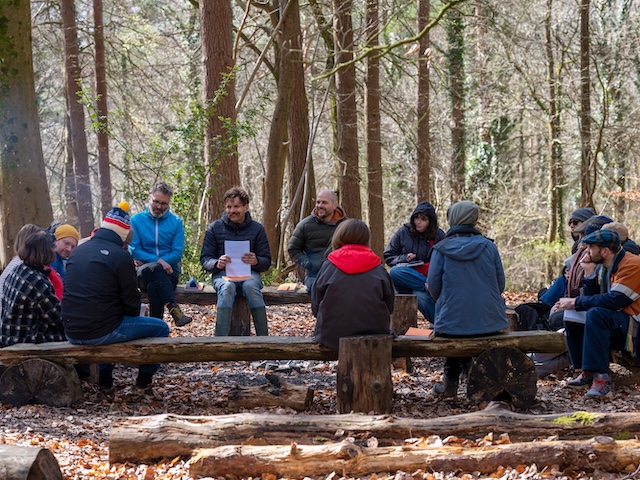
We don’t pretend the real world works like this. But this is a place we can return to — for perspective, recovery, and renewed energy to carry on the work of system change.
Everyone arrives with a Pattern from the Pattern Book, chosen as a guide through the Lab.
Over the first afternoon, we move through the wood. Three distinct habitats, each chosen to represent a different regenerative mindset. Each paired with a simple game and time for reflection.
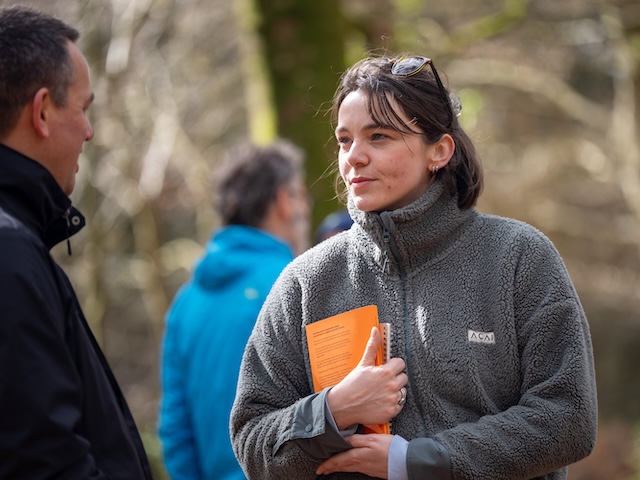
Some of the work is quiet. Observing. Noticing.
Some of it is more active — testing ideas, asking questions, beginning to see how each person’s inquiry might take shape.
And some of it is unexpectedly playful.
There are moments of seriousness — conversations about organisations, systems, and the challenges of making change stick.
And then, at other times, we find ourselves in something like satsuma jousting.
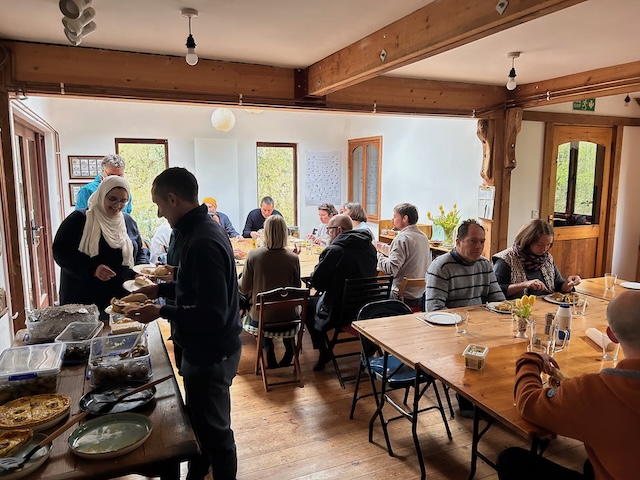
It’s easy to see these as opposites. But in practice, they are part of the same work. Play creates space. It changes how people relate. It allows new ideas to emerge that wouldn’t surface otherwise.
By the second day, the focus turns more directly to each person’s inquiry.
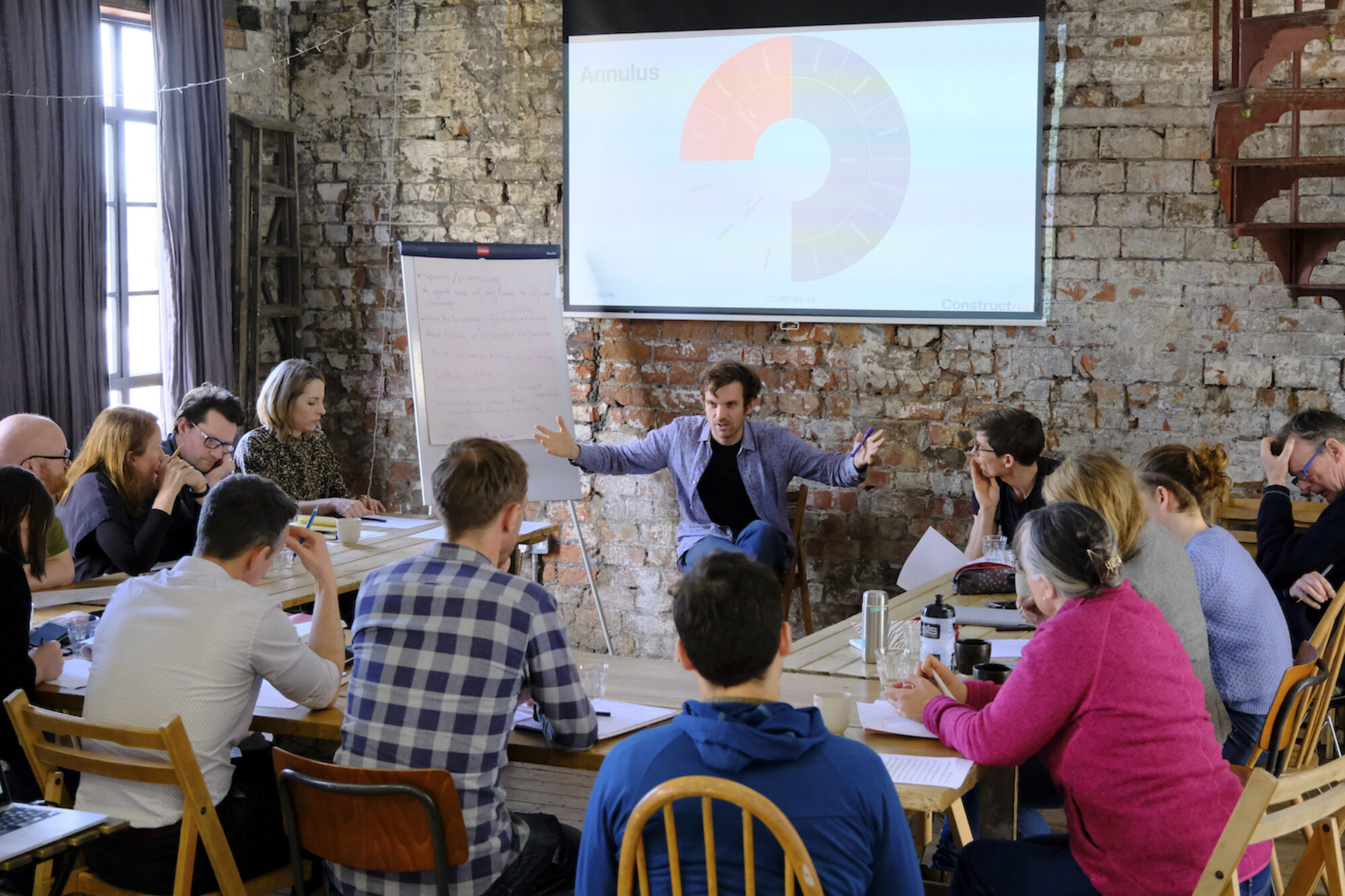
We work with the Systems Bookcase, exploring how different levels of a system interact — from underlying paradigms through to design decisions.
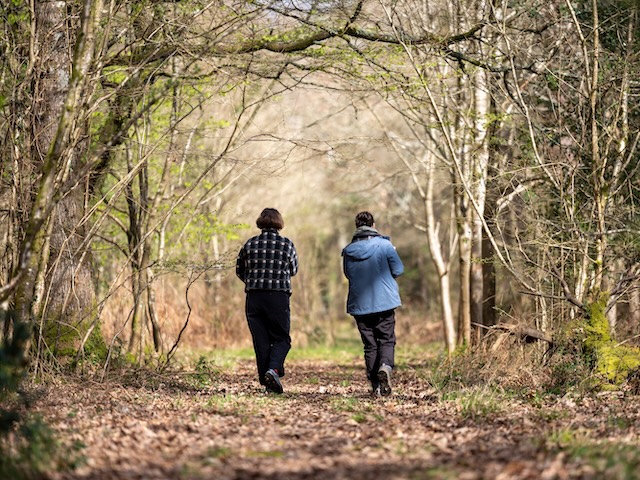
Then back out into the wood again — in pairs, and then alone.
- Why have I come here?
- Within this broad area of interest, what am I actually curious about?
- What pattern am I working with?
- And what might I try next?
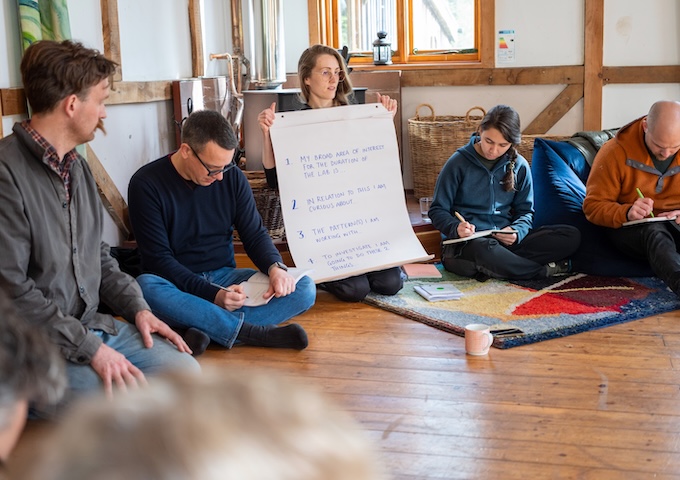
These aren’t intended to be final answers, rather, best next answers for now.
By the end, the group leaves the shelter of the wood and returns to their projects, organisations, and everyday constraints.
But not quite in the same way.
Because now we are observing, asking questions, looking for opportunities, looking for the lever that we will pull, the change that we will experiment with.
We’ll gather again here in the summer to share what we have discovered so far.